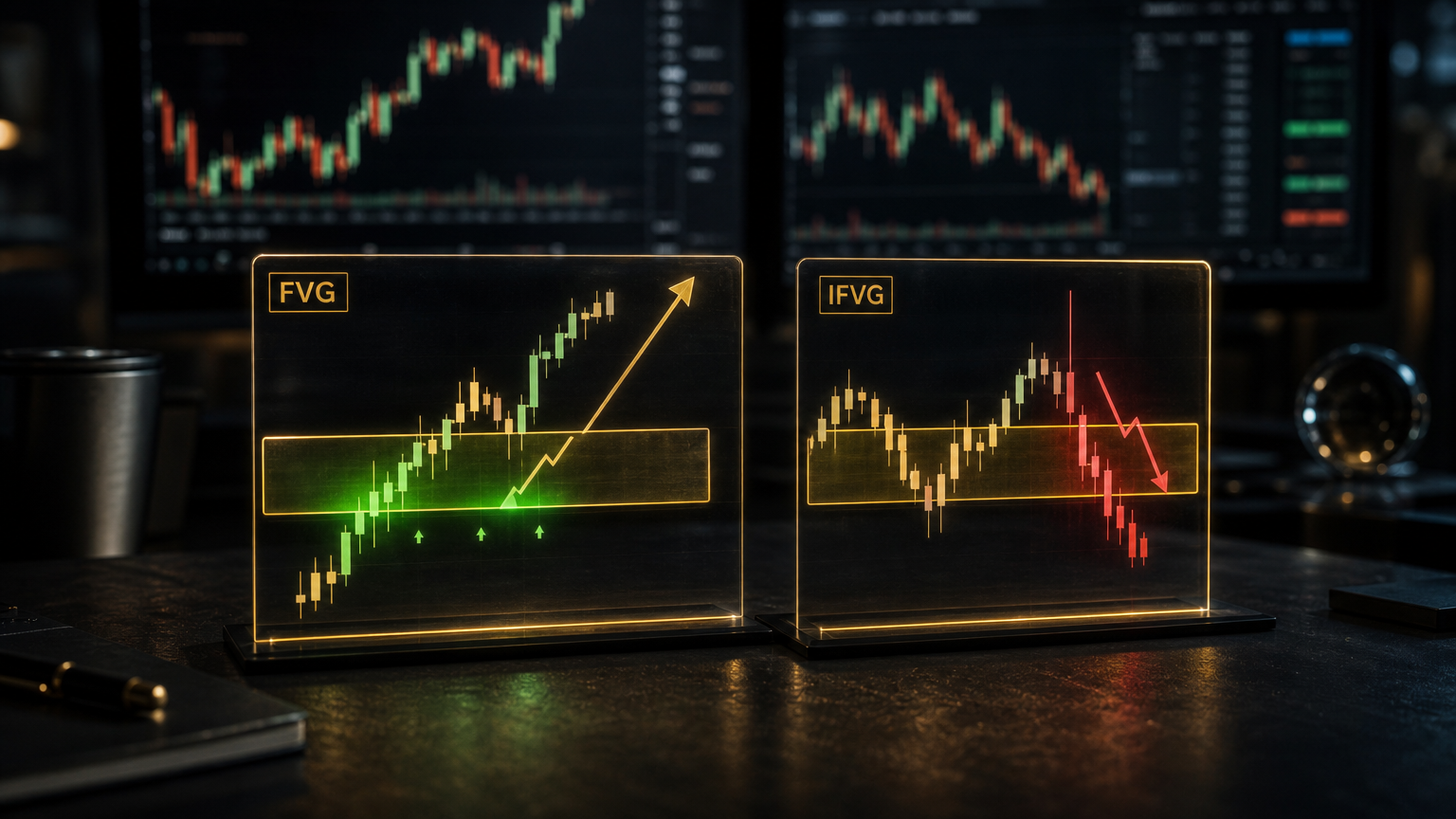
FVG and IFVG are related, but they answer different questions: one marks imbalance, the other asks whether that imbalance failed.
Bottom line: Understanding the role change prevents traders from buying or selling every gap they see.
Trading risk note: Tempo Trades content and tools are for educational purposes only and are not financial advice. Futures trading involves substantial risk of loss and is not suitable for every trader. Past performance, examples, testimonials, or creator results do not guarantee future results.
FVG in plain English
A fair value gap is an imbalance left by displacement. Traders watch it because price may return to rebalance the area before continuing or rejecting.
The mistake is assuming the gap itself has authority. It only matters when it fits a larger plan involving liquidity, bias, time, and risk.
IFVG in plain English
An IFVG appears when that imbalance fails and begins acting from the other side. The story changes from continuation into possible acceptance through the original area.
This is why role matters. A zone that once looked supportive can become resistance, or a bearish imbalance can become support, depending on how price accepts through it.
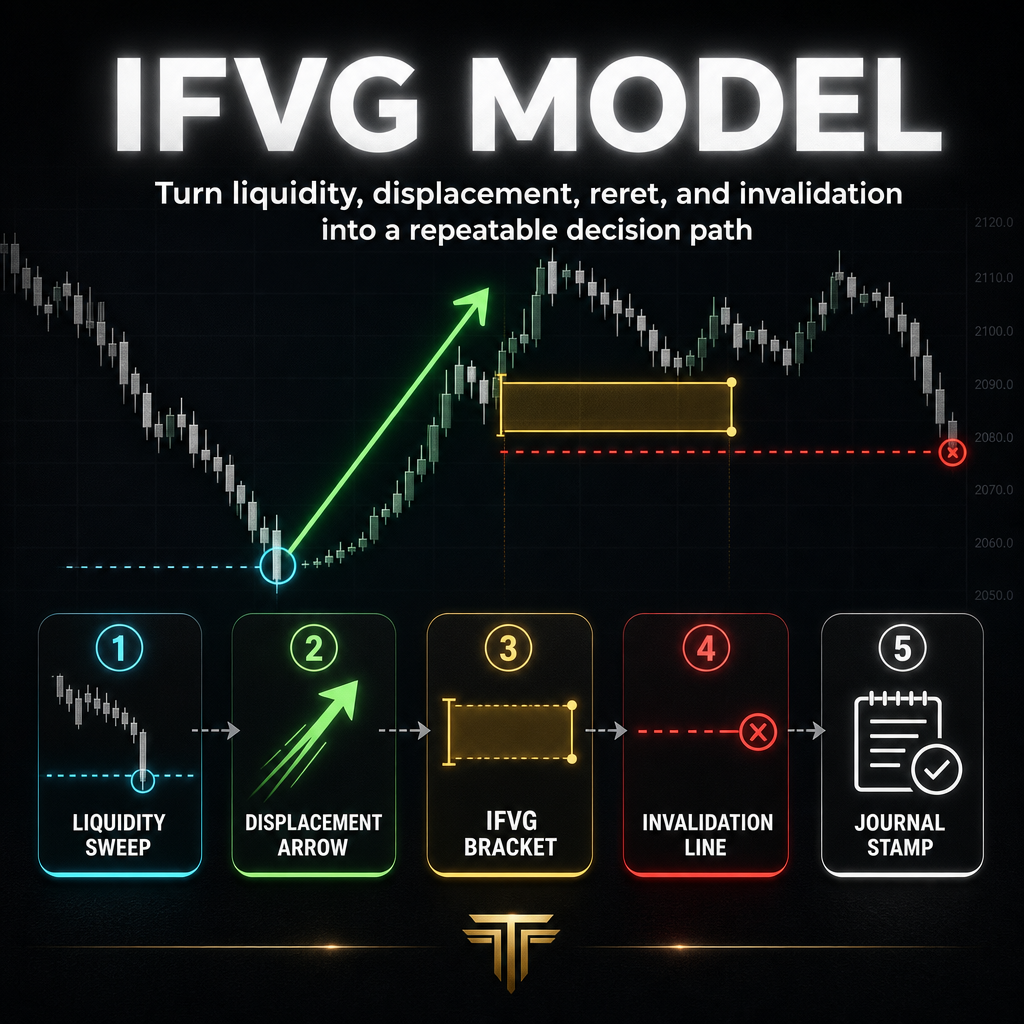
Continuation versus failure
FVG thinking often begins with continuation: price displaces, returns, and may continue. IFVG thinking begins with failure: price could not respect the original imbalance.
Both can be valid. The skill is knowing which question the market is currently answering.
How to compare them
Use three checks: what created the zone, what happened when price returned, and where the idea is wrong. If the zone is respected, you may be dealing with continuation. If it fails and retests from the other side, IFVG logic may be cleaner.
Do not rename a losing FVG as an IFVG after the fact. The plan must identify role change before entry, not during damage control.

Where traders get trapped
Traders get trapped when they use gap labels to avoid admitting uncertainty. A chart can have multiple gaps, conflicting timeframes, and no clean trade.
The right answer is often no trade. Concepts are filters, not obligations.
Practical verdict
FVG is about imbalance. IFVG is about failed imbalance and role change. Use both to clarify the trade plan, not to multiply reasons to click.
If the distinction does not change your invalidation or execution, it is only vocabulary.
Related Reading
- Tempo Trades Review: Is the Futures Trading Community Worth It?
- Tempo Trades Pricing: Which Offer Makes Sense for Your Workflow?
- Tempo Trades Indicator Review: ICT Tool or Signal Trap?
- IFVG Indicator Guide: How to Use Inversion Fair Value Gaps Without Forcing Trades
- SMT Divergence Indicator: How to Read Correlation Without Chasing Reversals
- Live Futures Trading Room: How to Learn From Real-Time Sessions Without Copying
- Tempo Trades Premium Discord: What a Trading Community Should Actually Do
- ICT Trading Course Review: What Beginners Should Actually Learn First
FAQ
Which is better, FVG or IFVG?
Neither is better. The market context decides which idea is relevant.
Can a zone be both?
A zone can begin as an FVG and later be interpreted through IFVG logic if it fails and changes role.
What should I journal?
Journal creation, return, reaction, invalidation, and whether the zone behaved as expected.
Does this guarantee profitable trades?
No. Nothing in Tempo Trades, this article, or any indicator guarantees profits. The goal is better process quality, not certainty.
Evaluate Tempo Trades only if it fits your current workflow and risk rules.
Review the Tempo Trades Indicator