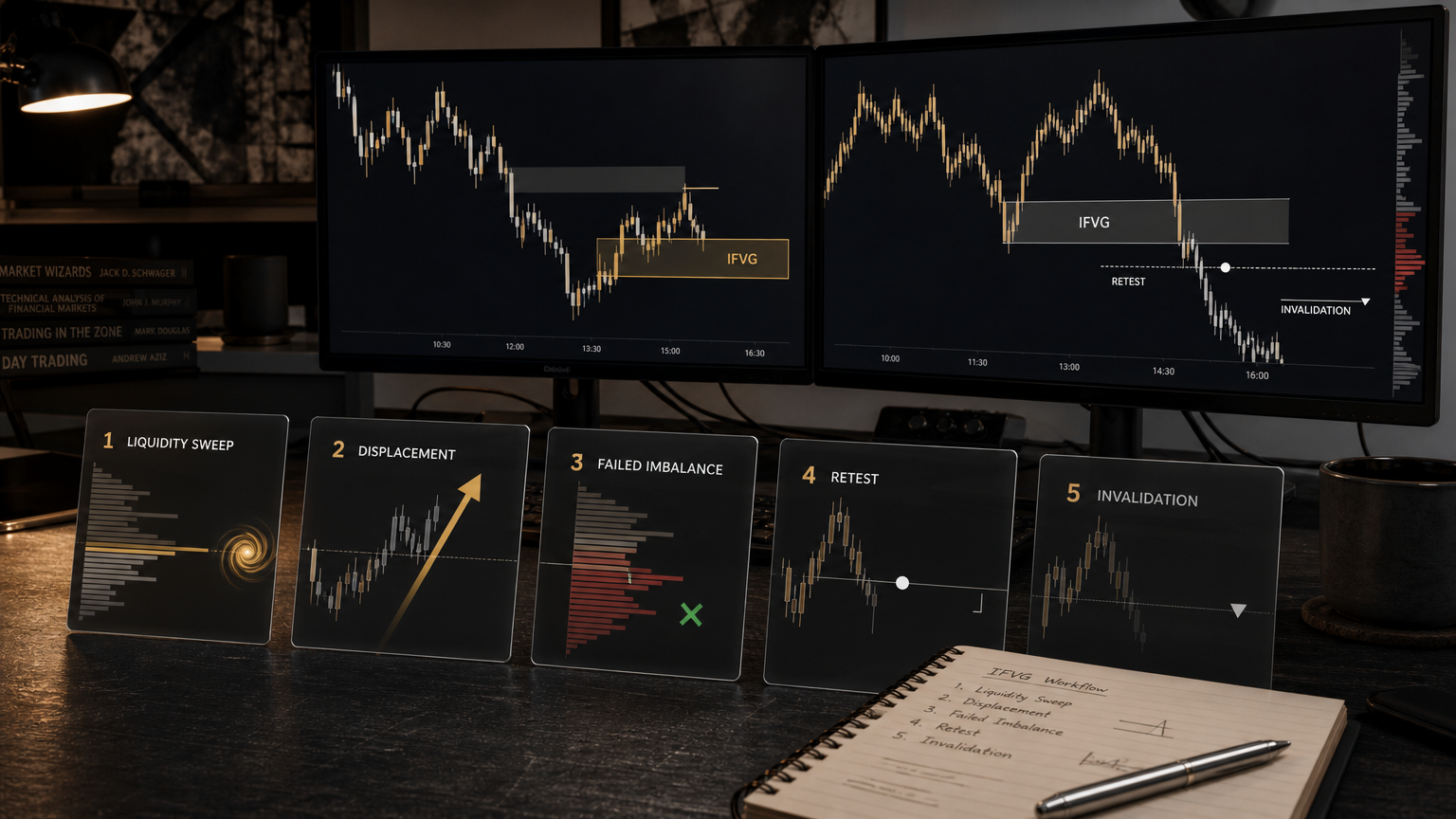
An IFVG is not magic. It is a failed imbalance that may change role, and the trade only matters if context agrees.
Bottom line: Use IFVGs as a filter for role change, not as automatic reversal entries.
Trading risk note: Tempo Trades content and tools are for educational purposes only and are not financial advice. Futures trading involves substantial risk of loss and is not suitable for every trader. Past performance, examples, testimonials, or creator results do not guarantee future results.
What IFVG means
An inversion fair value gap starts with an imbalance that fails to hold its original role. When price violates and reuses that area from the other side, traders watch for a change in control.
The concept is powerful because it frames failure. Instead of treating every gap as support or resistance forever, you ask whether the market has accepted through it and changed the story.
The context checklist
Before caring about the IFVG, define the session, higher-timeframe draw, nearby liquidity, and whether displacement actually exists. A weak push through a tiny gap is not the same as decisive acceptance.
The cleanest IFVG ideas usually appear after price has taken liquidity, displaced, and returned with a clear invalidation point. Without that sequence, the setup is easy to force.
Confirmation and invalidation
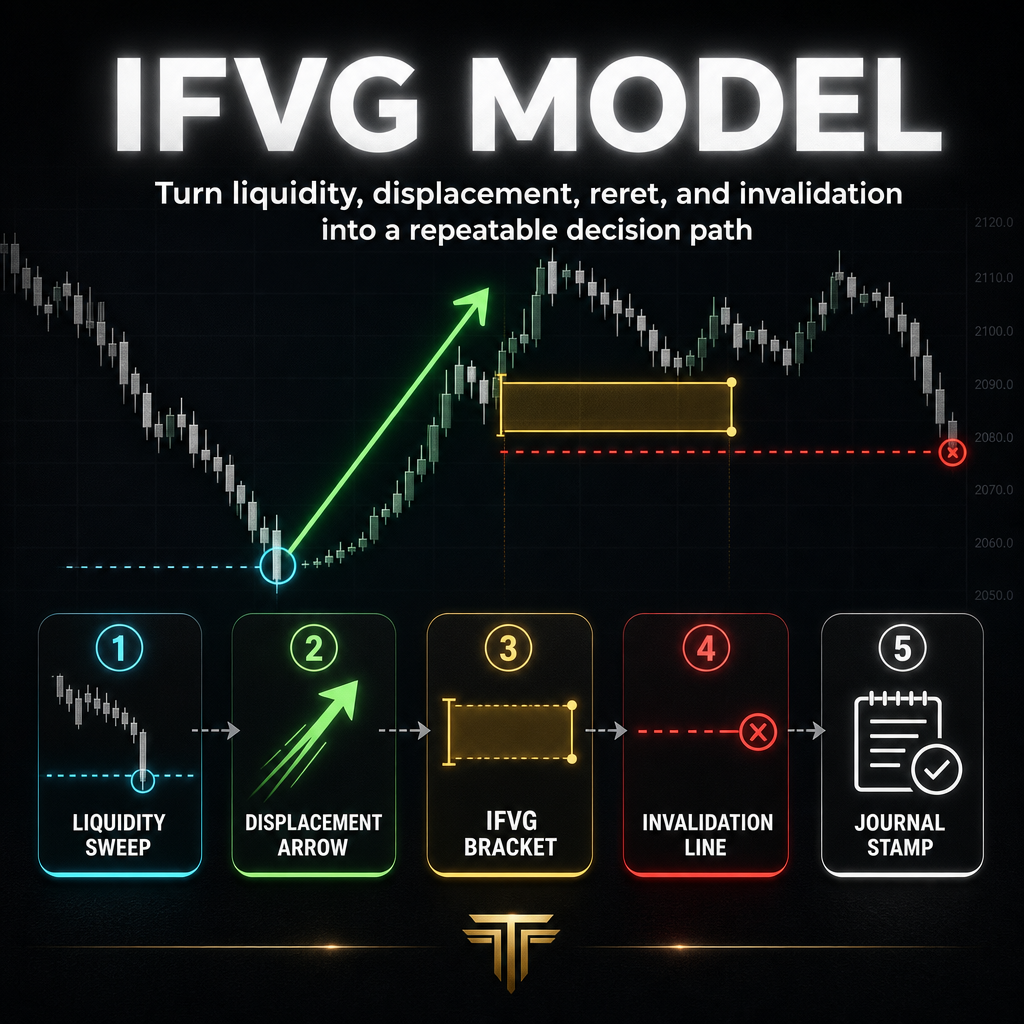
Confirmation is not a feeling. It can be a retest reaction, lower-timeframe structure shift, or failure to reclaim the zone. Invalidation should be visible before entry.
If you cannot say where the idea is wrong, the IFVG has not helped you. A marked box without invalidation is just decoration on the chart.
Common mistake
The common mistake is treating every retest as an entry. Markets can pass through IFVG zones repeatedly, especially during news, chop, or trend expansion.
Filter by time and condition. If the market is moving too fast for your plan, missing the trade is better than entering a zone you cannot manage.
How the indicator helps
An indicator can highlight possible IFVG areas and make your review more consistent. It can also reveal how often your eye sees only the gaps that support your bias.
Use the markings to ask better questions: Which zones mattered? Which failed? Did the best trades share location, timing, or displacement quality?
Practical IFVG workflow
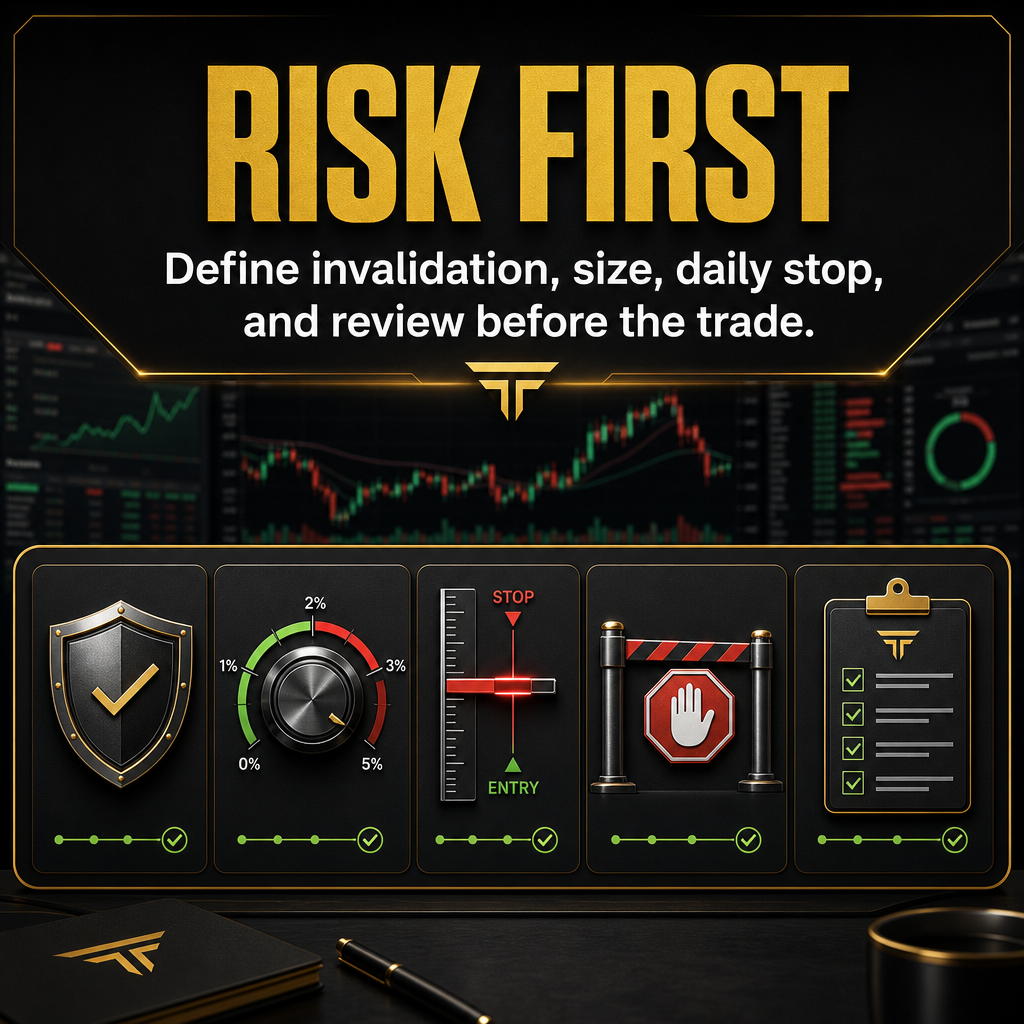
Mark bias, mark liquidity, identify displacement, wait for retest, define invalidation, size the trade, then review outcome against process. That sequence keeps the concept useful.
The goal is not more IFVG trades. The goal is fewer forced trades and a clearer reason when you do participate.
Related Reading
- Tempo Trades Review: Is the Futures Trading Community Worth It?
- Tempo Trades Pricing: Which Offer Makes Sense for Your Workflow?
- Tempo Trades Indicator Review: ICT Tool or Signal Trap?
- FVG vs IFVG: The Difference That Changes Your Trade Plan
- SMT Divergence Indicator: How to Read Correlation Without Chasing Reversals
- Live Futures Trading Room: How to Learn From Real-Time Sessions Without Copying
- Tempo Trades Premium Discord: What a Trading Community Should Actually Do
- ICT Trading Course Review: What Beginners Should Actually Learn First
FAQ
Is every IFVG a reversal setup?
No. It can support continuation or reversal depending on the broader context.
What invalidates an IFVG idea?
Your own plan should define it, usually through reclaim, failed reaction, or a break in the thesis.
Should beginners trade IFVGs live?
Beginners should study them in replay first and document examples before risking money.
Does this guarantee profitable trades?
No. Nothing in Tempo Trades, this article, or any indicator guarantees profits. The goal is better process quality, not certainty.
Evaluate Tempo Trades only if it fits your current workflow and risk rules.
Review the Tempo Trades Indicator