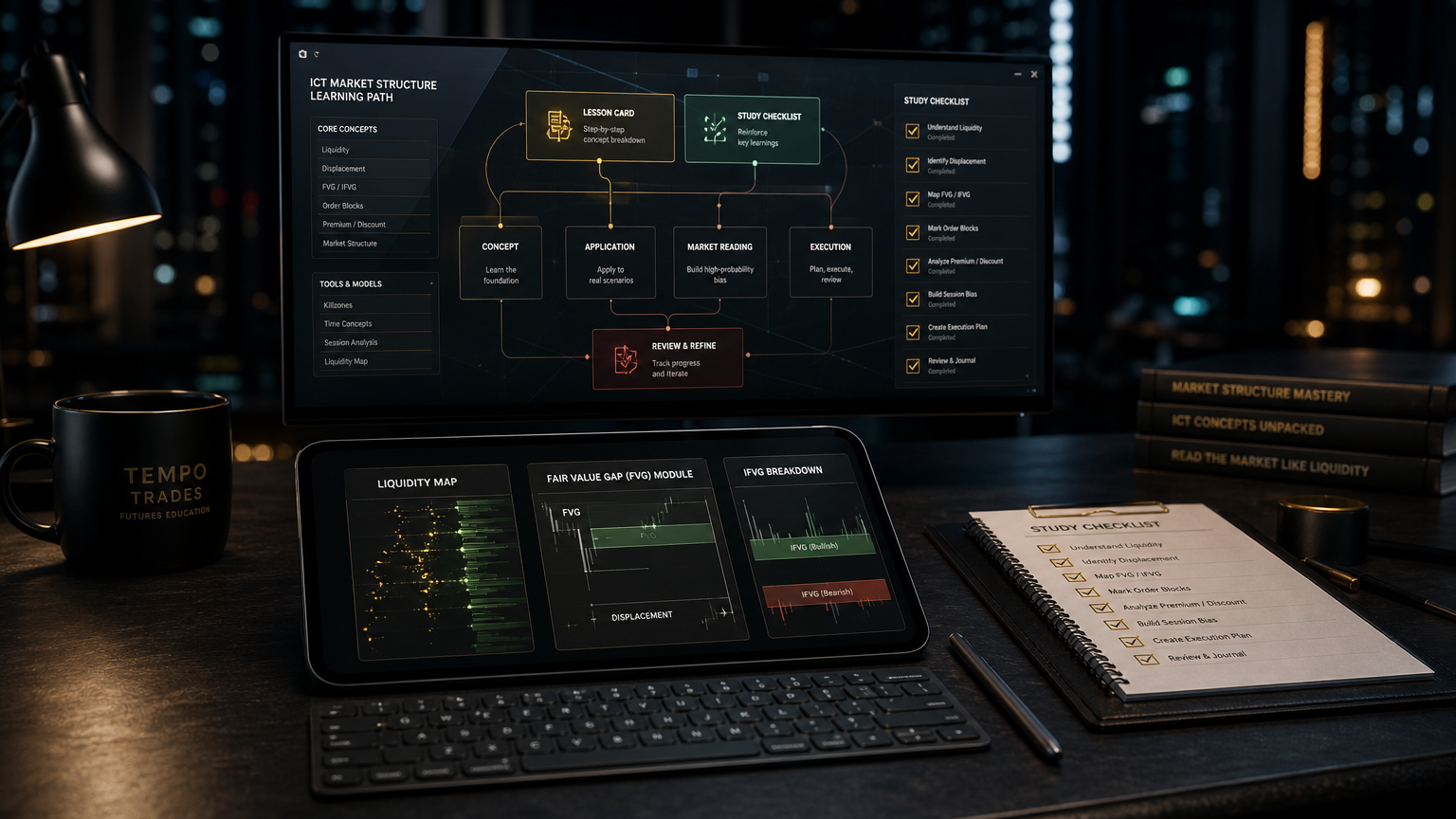
A good ICT trading course does not teach more acronyms. It turns a few concepts into repeatable decisions.
Bottom line: Beginners should learn liquidity, displacement, FVG, IFVG, invalidation, and risk before chasing advanced setups.
Trading risk note: Tempo Trades content and tools are for educational purposes only and are not financial advice. Futures trading involves substantial risk of loss and is not suitable for every trader. Past performance, examples, testimonials, or creator results do not guarantee future results.
The beginner problem
ICT language can make beginners feel productive while they are still unable to plan one clean trade.
The goal is not to collect terms. The goal is to know what you need to see before risking money.
Core concepts first
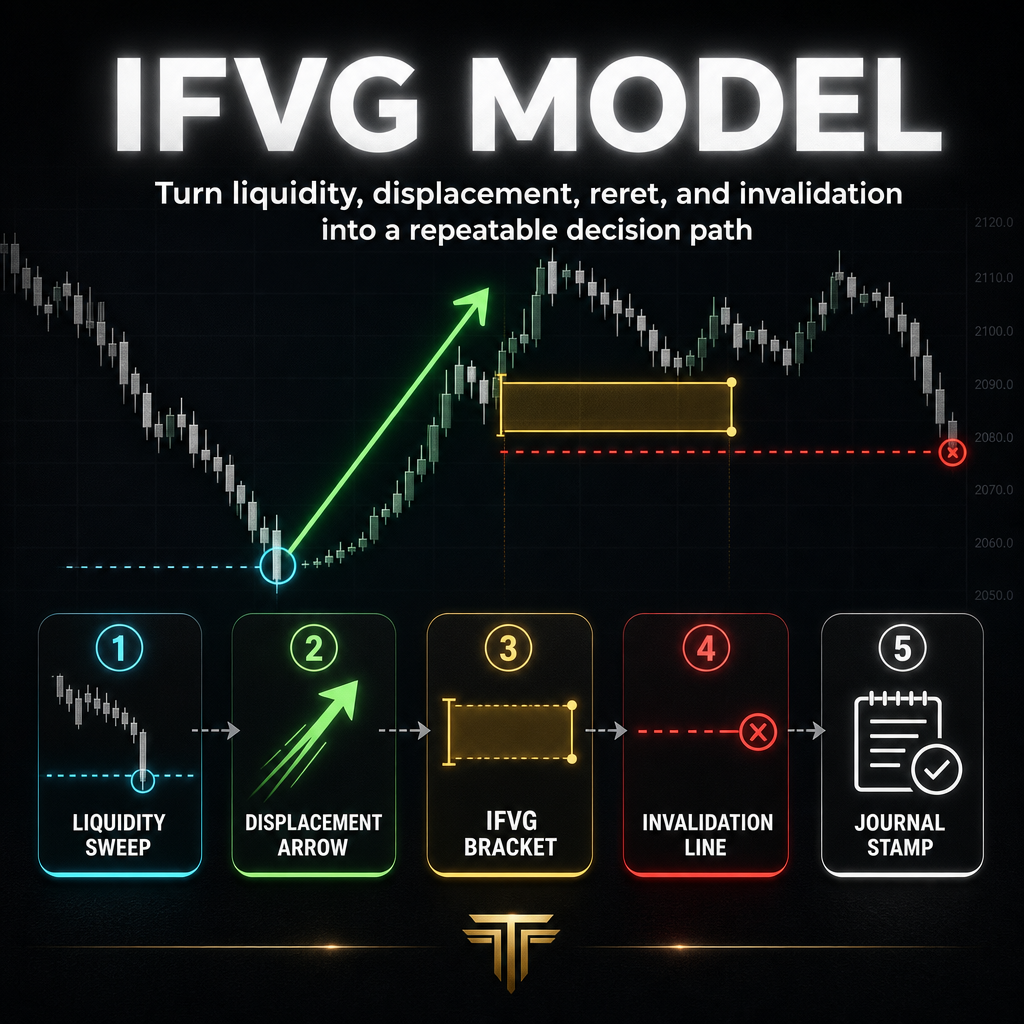
Start with liquidity, market structure, displacement, fair value gaps, inversion logic, and session timing.
Each concept should answer a job: where is price likely drawn, what changed, where is entry considered, and where is the idea wrong?
Free course context
The Whop pages surface the 2026 IFVG Course 2.0 as a free related offer from Tempo Trades.
That is useful for beginners because it gives a low-risk place to study before paying for premium access or trading live.
How to study
Watch a lesson, mark three examples, then find three failed examples. Failed examples teach boundaries.
A course is not complete until you know when the concept should be ignored.
When to upgrade
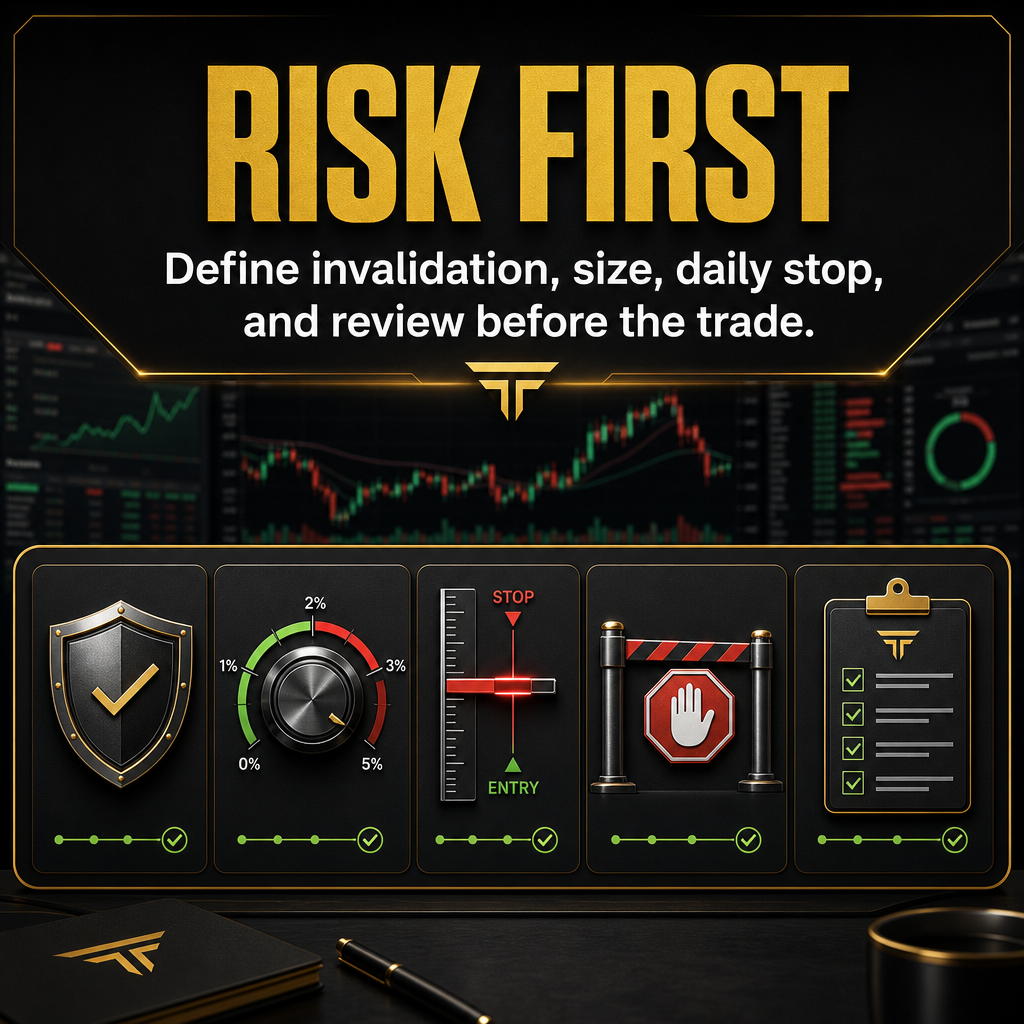
Premium makes more sense after the beginner has questions from real chart work.
If you have not studied or journaled, live access may create more noise than clarity.
Verdict
The right course compresses the path from vocabulary to checklist.
If you cannot write the checklist after watching, rewatch before adding risk.
Related Reading
- Tempo Trades Review: Is the Futures Trading Community Worth It?
- Tempo Trades Pricing: Which Offer Makes Sense for Your Workflow?
- Tempo Trades Indicator Review: ICT Tool or Signal Trap?
- IFVG Indicator Guide: How to Use Inversion Fair Value Gaps Without Forcing Trades
- FVG vs IFVG: The Difference That Changes Your Trade Plan
- SMT Divergence Indicator: How to Read Correlation Without Chasing Reversals
- Live Futures Trading Room: How to Learn From Real-Time Sessions Without Copying
- Tempo Trades Premium Discord: What a Trading Community Should Actually Do
FAQ
What should beginners learn first?
Liquidity, displacement, FVG, IFVG, invalidation, and risk.
Is more terminology better?
No. Fewer concepts used well are more useful than many concepts used vaguely.
When should I trade live?
After you can explain entries and exits in simulation without changing rules mid-trade.
Does this guarantee profitable trades?
No. Nothing in Tempo Trades, this article, or any indicator guarantees profits. The goal is better process quality, not certainty.
Evaluate Tempo Trades only if it fits your current workflow and risk rules.
Review Tempo Trades Premium